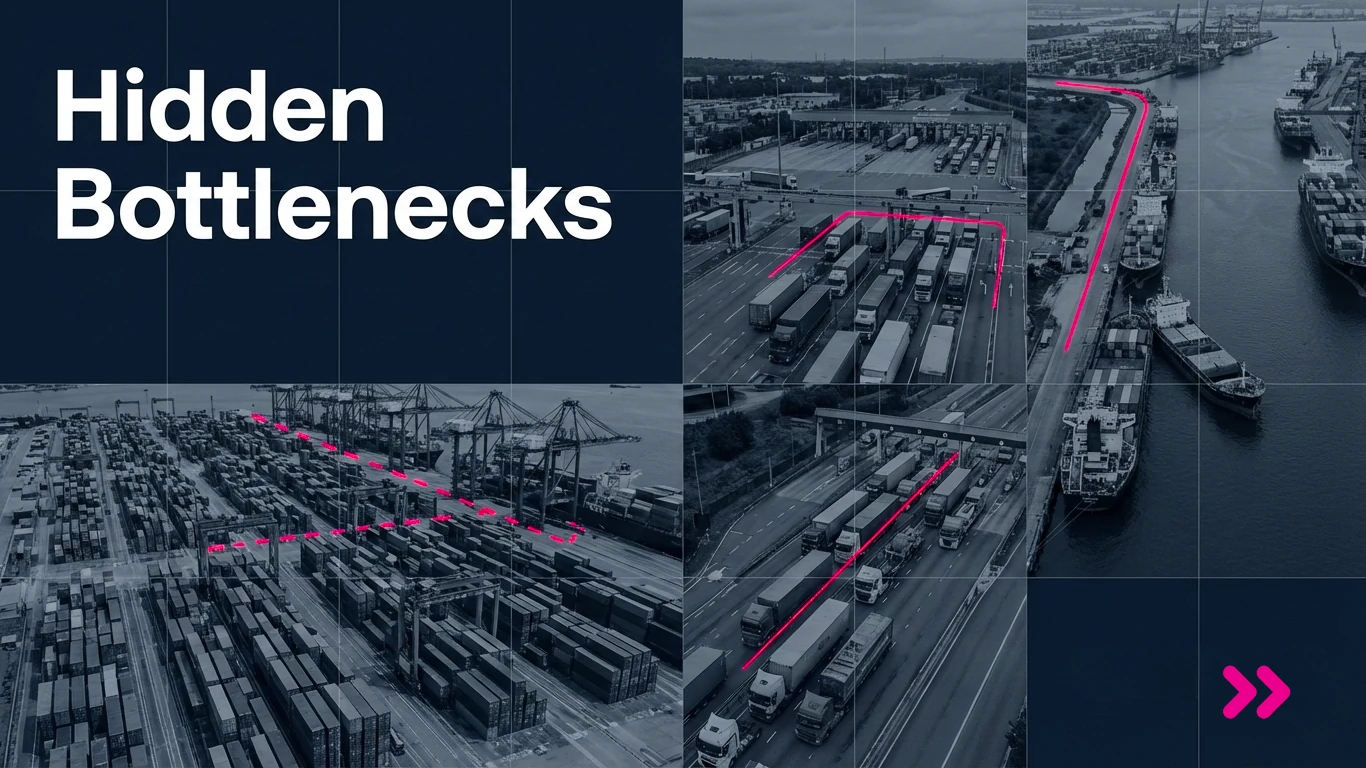
Major investments in technology and infrastructure are undercut by a handful of persistent, people-and-process failures. Here’s where to look—and how to act.
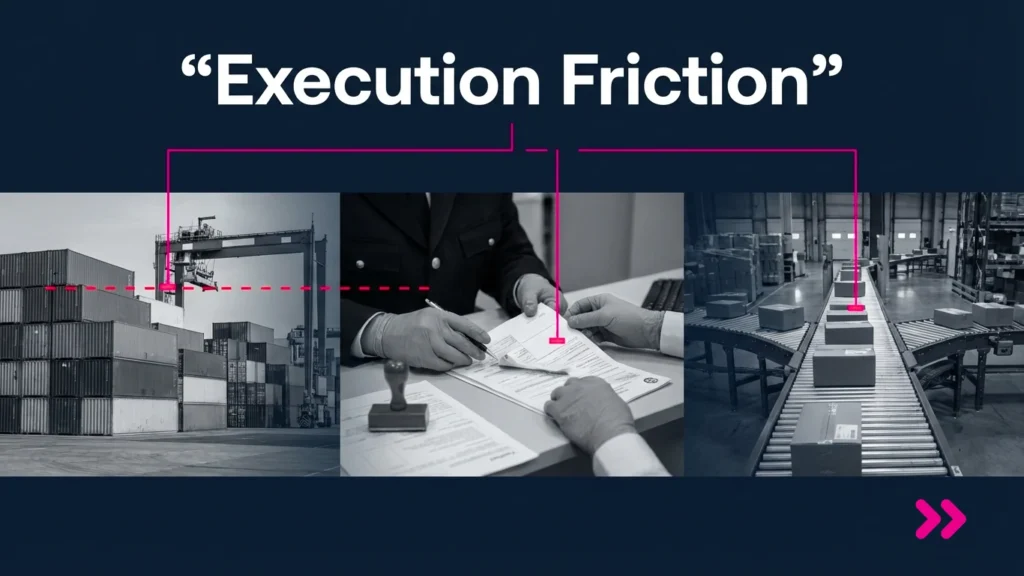
Our data reveals that the vast majority of non-geopolitical delays stem from these four core issues:
- Incomplete or Inaccurate Documentation
The most frequent and costly choke point. A single error in a commercial invoice, certificate of origin, or packing list doesn’t just slow a shipment—it triggers a chain reaction of manual corrections, queries, and customs holds that can strand cargo for days. - Suboptimal Route & Mode Selection
Often a result of habit or outdated data. Shipments are routed based on historical contracts or generalized rates, not dynamic real-world conditions of port congestion, carrier reliability, or total landed cost—leaving speed, savings, and resilience on the table. - Supplier–Forwarder Misalignment
A critical handoff plagued by poor communication. Suppliers operate on their own timelines and protocols, while forwarders manage to achieve a different set of priorities. This gap creates last-minute scrambles, missing information, and loading delays that compromise the entire plan. - Procedural Misunderstanding of Customs
Regulations evolve, but local knowledge does not always keep pace. Applying a generalized rule to a specific port or a changing regulatory detail leads to unexpected duties, compliance flags, and avoidable inspections.
These issues are notoriously resilient because they exist in the functional seams of an organization. They are not solely a logistics problem, a finance problem, or a procurement problem. They thrive in the grey area between:
- Logistics & Procurement(supplier onboarding)
- Trade Compliance & Operations(document accuracy)
- Commercial Teams & Execution Teams(route costing vs. route reliability)
Without clear, cross-functional ownership and defined handoff protocols, these bottlenecks become permanent fixtures—accepted as “the cost of doing business.”